Step 2: Electrolysis
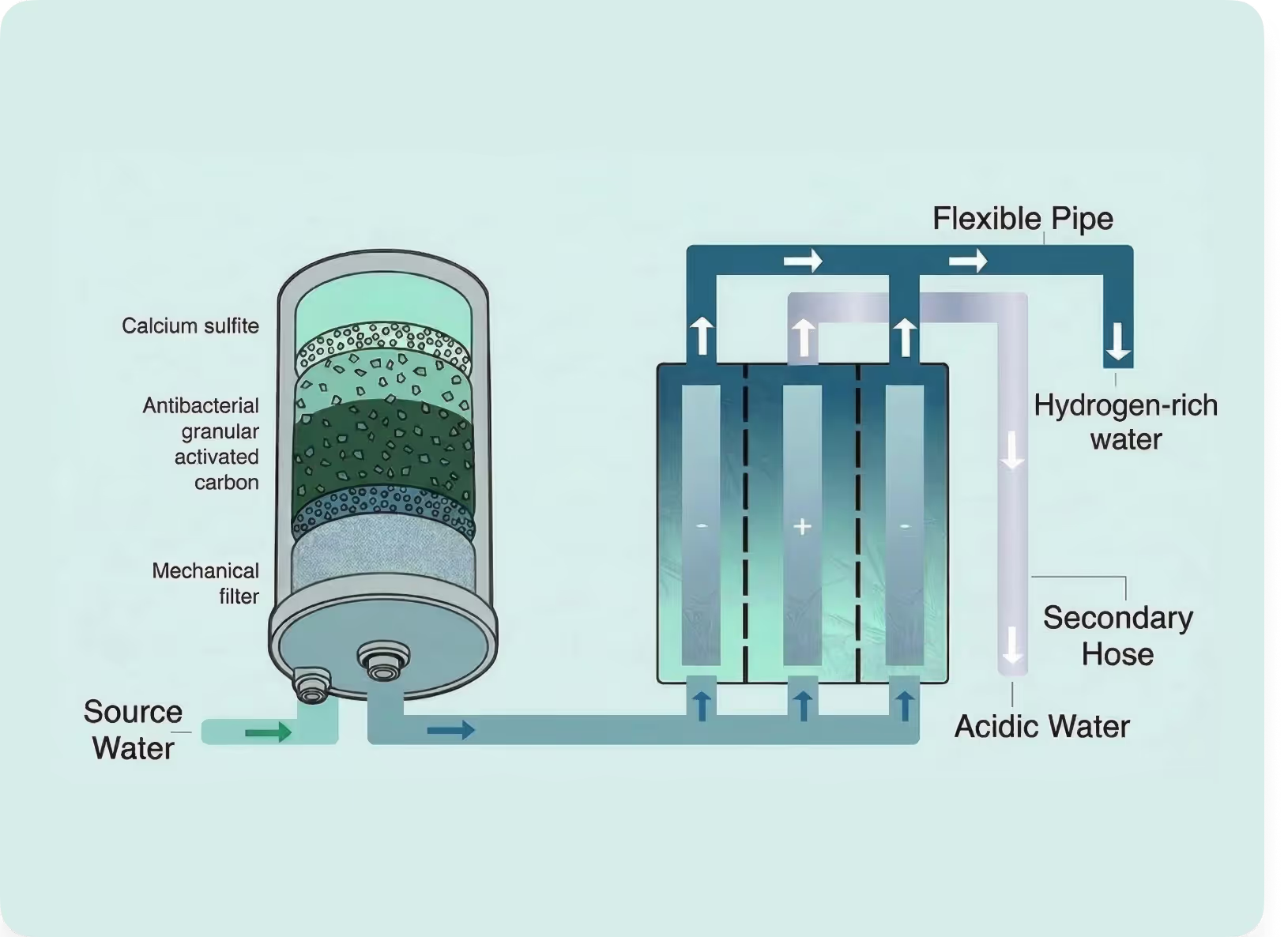
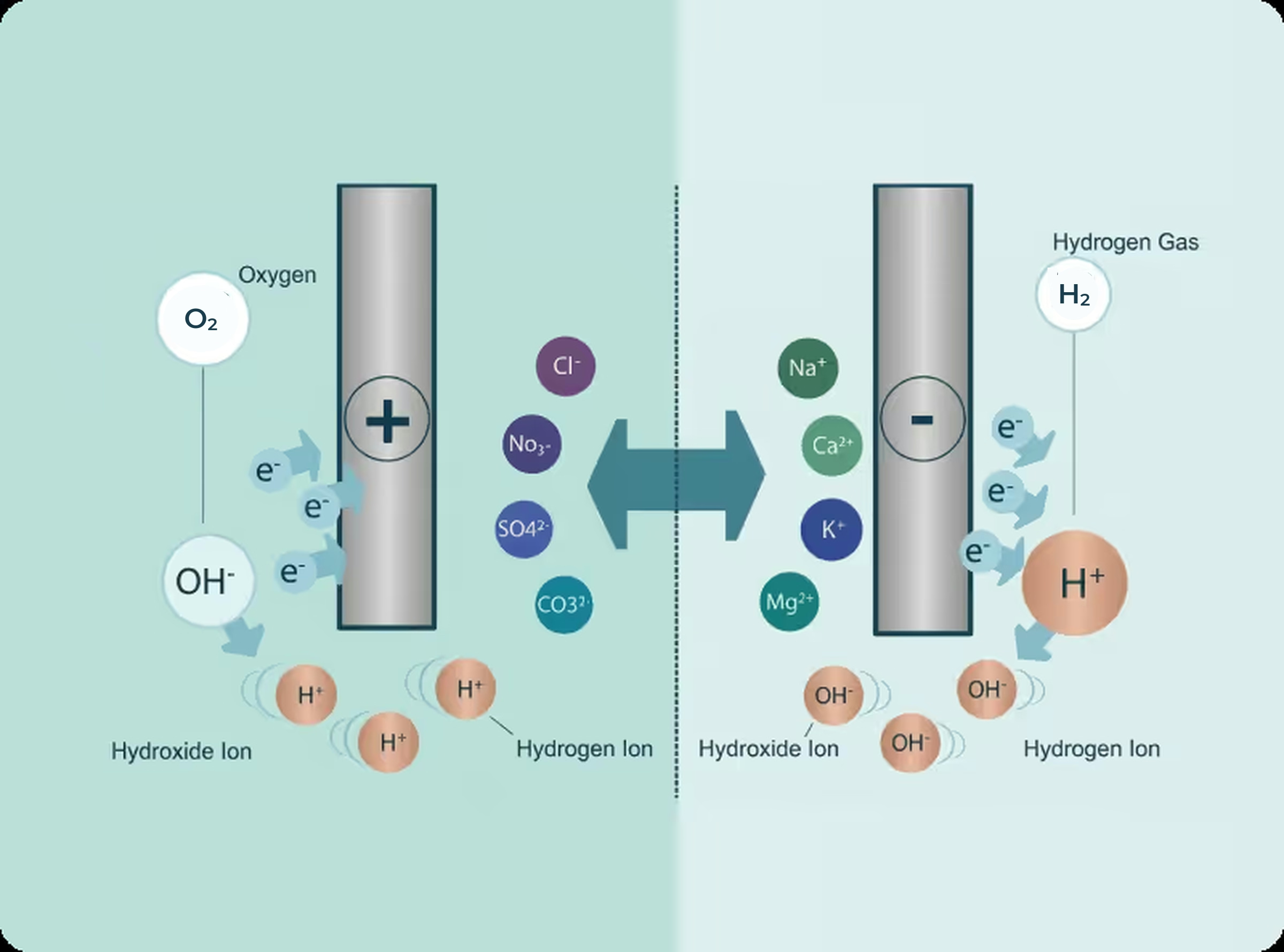
The filtered water moves through several electrode plates and membranes, separating into acidic and alkaline parts. It is split into OH- (hydroxide ions) and H+ (hydrogen ions).
The hydrogen ions react with electrons given by the cathode (– charged electrode), forming H₂, molecular hydrogen. Hydroxide ions remain, making the water more alkaline around the cathode. Close to the anode (+ charged electrode), hydroxide ions give electrons to the anode, eventually forming O₂ (oxygen). Hydrogen ions remain, making the water more acidic around the anode. The two kinds of water are separated by membranes and released through different hoses.